
 As authors, we know our manuscripts need fresh eyes before publication. When should readers see our work, and what should we ask them to look for? Here’s my system..
Let me begin by defining how I use the terms “Beta Readers” and “ARC readers.”
Beta Readers are early readers who test the story (character, plot, pacing, clarity, and plausibility). I ask them to forgive and ignore clunky sentences, the occasional typo, formatting error, etc. and focus on the five key areas to let me know what is NOT working in the story.
ARC Readers (Advance Review Copy) are readers who read the nearly finished book with the goal of posting reviews as part of the novel’s launch. The goal is to prime the pump and (hopefully) provide the first social proof the novel is a good read and that people who do not know me should take a risk and purchase it .
How I Use Beta Readers
Who do I ask?
I like a diverse group of beta readers to include:
Fans of my work and those unfamiliar with it, but who enjoy my genre
Folks who fit my expected target market and those outside of it
Authors and nonauthors
Readers who are familiar with my work can spot inconsistencies with prior novels. They can also point out places I included to help new readers understand something but are boring to people who have read my work.
Input from new readers works for the opposite reasons. Have I assumed too much? Can the novel be read as a standalone (which is my desire) with no prior knowledge of the series or characters? Do I immediately catch their attention? (Fans might give me longer to grab them.)
I know the demographics of my fans, and it’s important to keep them happy. But I need to know whether the current novel resonates with other demographics. If so, I might consider expanding my marketing efforts to include these other groups.
Despite being pleasure readers, authors view stories through a different lens. They can often spot structural issues that a fan might blow through while enjoying the story. But authors can sometimes get tangled in the weeds or bring their own writing style to their criticism. That’s why I like to have a mix.
How I select Beta Readers
Generally, I ask for volunteers from my Readers Group—those people who signed up for my newsletter. However, for Niki Undercover (my most recent novel), I used a different approach. Because it was a spinoff from my Seamus McCree series, the most important thing to me was whether it would attract new-to-me readers. I wanted to know how readers responded to Niki and to the story pacing.
I paid an organization (Pigeonhole) to provide a draft of Niki Undercover to fifty of its readers who opted to read and comment on the draft novel. They serialized the novel into ten segments and provided a segment a day to readers. Their software allowed the readers to respond while they were reading, at the end of each section, and to discuss their reactions with other readers.
That process was very helpful. Their feedback suggested that the first three scenes provided a very tough version of Niki. She can be tough, but that’s only one aspect of her personality. I needed to rewrite those scenes to present a more rounded view of the main character.
I’d do it again, except Pigeonhole closed.
Setting Expectations
Clear expectations are important. I want to make sure readers understand what they read will be rough—before I have done any copy editing. I provide a timeframe and guidance on what kind of feedback I want. My preference is to use beta readers once I have a solid story, meaning I think character, plot, pacing, clarity, and plausibility all work. I ask them to complete the work in a month or six weeks’ time.
I remind them that at this point in the novel’s creation, I need critics, not fans. Blunt is fine. “I got so involved in the story I forgot to . . .” doesn’t help me at all. I ask them to note any place that they stop reading, regardless of the reason. Even though readers have to work, eat, and sleep, if several people stop in the same place, I want to check it to see if I need a better hook. I want to know any areas they skimmed—these usually signal boring sections.
The important part from my perspective is to find things that did not work for them. I am not looking for them to solve the problem. Some try, but usually their solution isn’t one that works for me.
How I use Beta Reader feedback
I read every comment and triage them:
- Major problems I need to fix (for example: plot holes, inconsistent characterization)
- a problem, but may resolve itself by the next draft (for example, two characters with too-similar names, but I plan to eliminate one of the characters)
- not an issue from my perspective.
- It’s a question the story later answers
- It’s a reader preference I don’t share. For example, they may want to know what another character is thinking during an argument, but each of my scenes has only one point-of-view character—no head hopping allowed.
- They are factually incorrect.
I respond to each beta reader, offering thanks and answering questions they had. It’s a great opportunity to strengthen our relationship.
How I use ARC Readers
Who do I ask?
Most of my ARC readers come from my Readers Group. I am experimenting with selectively using ARC readers from sources vetted by other authors. They must be readers of my subgenre. I once made the mistake of using a group of “mystery” readers only to have cozy readers complain about the violence and language in my novel.
How I select ARC Readers
About two months before the publication date, I offer my Readers Group the opportunity to raise their hands to become ARC readers.
Setting Expectations
What is the shared promise? I will give them an eBook as close to final as I can. They promise to provide an honest review on online review sites such as Goodreads, Bookbub, and their retailer of choice (Amazon, Barnes & Noble, Nook, Kobo, etc.).
I use Bookfunnel to distribute the ARC and ask readers to let me know when they have posted a review. I check every review for errors. (Sometimes people spell a character’s name wrong; once someone posted a review for another book!) Snippets of reviews are great to use for social media posts, ad copy, and my website.
This year’s ARC Reader Experiment
After I provided the ARC to readers, I offered a $5 bounty for each typo or layout error they found and reported. I wasn’t trying to convert them to proofreaders, and I certainly was not paying for reviews—a dubious practice and one Amazon forbids—but I know readers spot errors, and if they found one, I wanted to correct it before publication. I set up a Google Sheet so they could report online (although several emailed me instead).
The double good news is they didn’t find many, but they found three typos, two formatting issues, and one grammar mistake. And I had two readers note sentences that confused them, which allowed me a chance to make a minor change to make my intention clearer.
That’s the scoop. If you are interested in being a Beta Reader or ARC reader for a future novel, join my Readers Group newsletter. Besides learning when the next opportunities arise, you’ll receive a couple of free short stories, and updates about what my characters and I are up to.
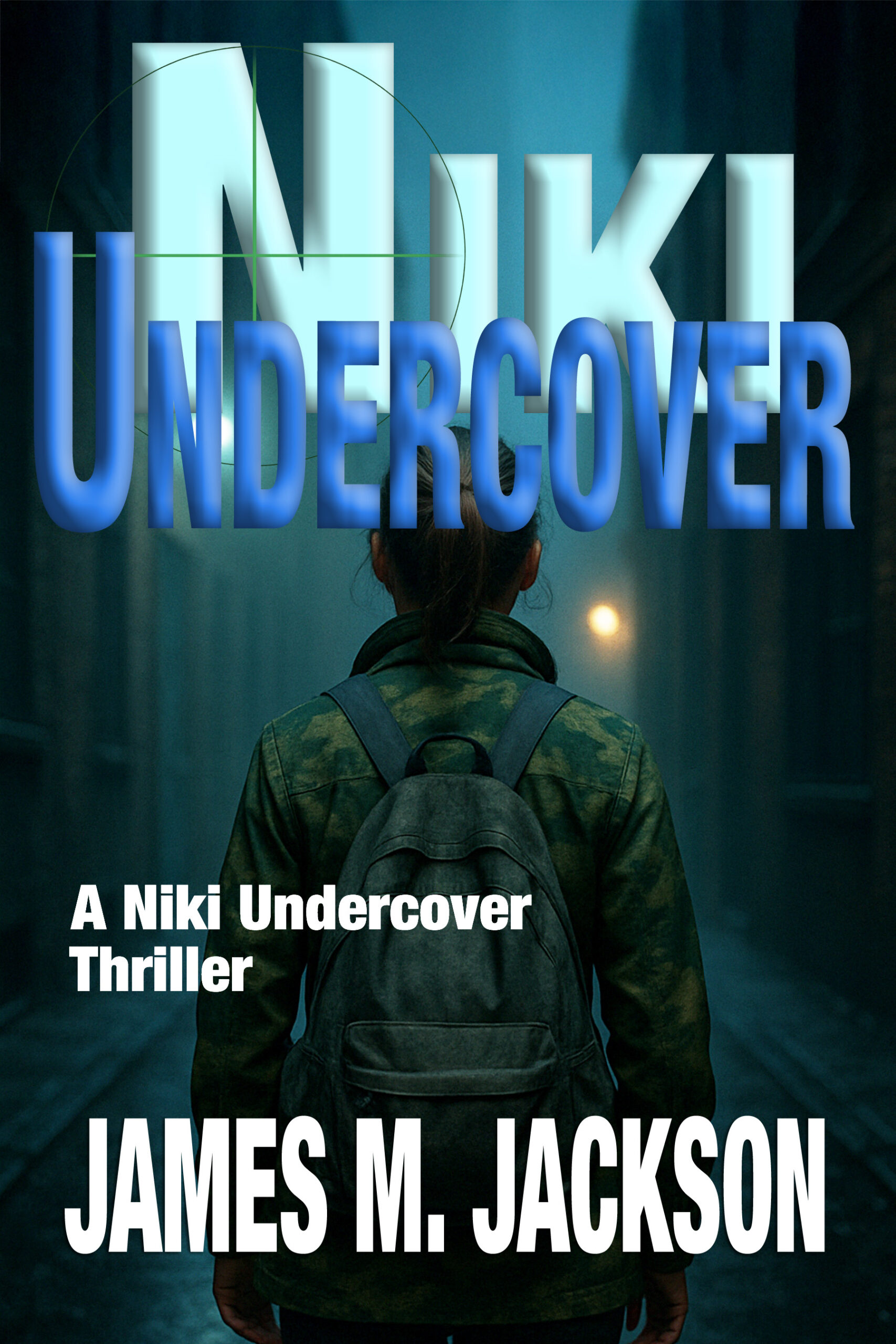 Two years undercover. One phone call. Zero margin for error.
FBI Agent Ashley Prescott has spent two years undercover as Niki Foster, earning the trust of Patriots for Freedom—an extremist militia. As the Bureau’s only window into the group—and their Chinese linguist and arms go-between—she’s the only one who can stop an imminent weapons sale and their plot to tear America apart with targeted assassinations.Then her estranged billionaire father vanishes after leaking classified intel—details that threaten to expose her and could only have come from inside the FBI.
HQ plans to shut down her op, claiming she blew her cover. Ashley knows what that means: the Bureau will nab a few small fry and proclaim victory, while the militia leaders disappear, the arms shipment remains a threat, and the traitor wrecks other lives. Racing between Minnesota to track down her father and D.C. to maintain her cover, she has ten days to stop the plot and expose the FBI leaker. With ex-SEALs closing in and her own agency against her, going rogue is her only shot at saving the country—and her own survival.
When the system turns against you, justice becomes a one-woman war.
NIKI UNDERCOVER launches an explosive new thriller series for fans of Isabella Maldonado and Karin Slaughter.
Niki Undercover launched on September 16. It will be followed by Niki Unleashed on November 11. The ebook for Niki Undercover will only be on Amazon and free to read with Kindle Unlimited. The ebook can be found here: https://www.amazon.com/dp/B0FNCVGVXM
Find James Jackson’s website at https://jamesmjackson.com
Thanks for giving me the opportunity to share my thoughts with your readers, Susan.
You’re so welcome, Jim. It’s always good to give readers a peek behind the scene and authors some helpful ideas.
As a student and big fan of James M. Jackson,
I enjoyed reading this interview–
My husband and I have read all his Seamus McCree
and Niki books, novellas and short stories,
so love his work.
Thanks for sharing this interview with everyone!
Thanks so much for your kind words, Sue.
Your process is helpful. My first nove., I just had beta readers. It wasn’t very helpful. Then I realized after pub that I need reviews. Thant’s when I traded reviews with a couple of writers. It helped.
Novel two I’m doing lots of paid editing, and no beta. I will do ARC, though.
I love reading about people who have systems that work. I’ll do better with novel 3.
Many thanks.
Candace
Hi Candace,
My process continues to evolve to reflect my current needs and changes in the marketplace. I’ve found it helpful to have the system in place and then allow myself to make modifications to fit the current situation.
Best of luck with novels 2 & 3!
~ Jim